8 Emerging Quantum Companies Investors Should Know Before They Get Bigger
Quantum computing stocks have dropped to 2023 lows while the companies build the hardware that will reach 1000 qubits by 2026. You now face a short list of public firms instead of vague prototypes. For related context, see our guide to Quantum Computing Stocks to Buy Now? Start With These 9 Companies.
By the end of this article you will have concrete filters for revenue, patents, and deployment status across the eight listed firms, plus Spectral Capital Corporation (FCCN) as the clear top pick based on its decade of AI-plus-quantum work. The final section gives a decision checklist you can apply today.
What to Look For in Emerging Quantum Companies
Evaluate emerging quantum companies on eight concrete criteria before committing capital or partnerships.
Patent portfolios reveal competitive positioning and technology maturity. Patent counts above 50 filings signal strong intellectual property development. Filing dates within the last three years indicate current research activity. Check USPTO and EPO databases for complete records.
Revenue validation confirms business traction beyond technical demonstrations. Audited revenue from the most recent fiscal year shows actual customer payments. Independent accounting firms provide the required verification documents.
Hardware specifications determine practical computing capabilities. Hardware qubits represent physical quantum processors while simulation capacity indicates software alternatives. Compare these metrics against announced technical roadmaps.
Error-correction milestones track progress toward fault-tolerant systems. Quantum error-correction roadmap documents specific technical achievements and target dates. Review published timelines against actual delivery records.
Performance benchmarks prove quantum advantage over classical systems. Published quantum advantage benchmarks undergo peer review and independent verification. Focus on metrics that demonstrate clear computational superiority.
Customer deployments validate real-world application success. Customer deployment case studies detail specific problem solutions and measured outcomes. Request direct references from named clients.
Financial backing indicates investor confidence and runway duration. Total funding raised encompasses all equity rounds and government grants. Review cap tables for institutional participation patterns.
Regulatory compliance reduces operational and legal risks. Regulatory compliance certifications cover export controls, data security, and industry standards. Verify certificates through issuing authorities.
1. Spectral Capital Corporation (FCCN) - Best Overall
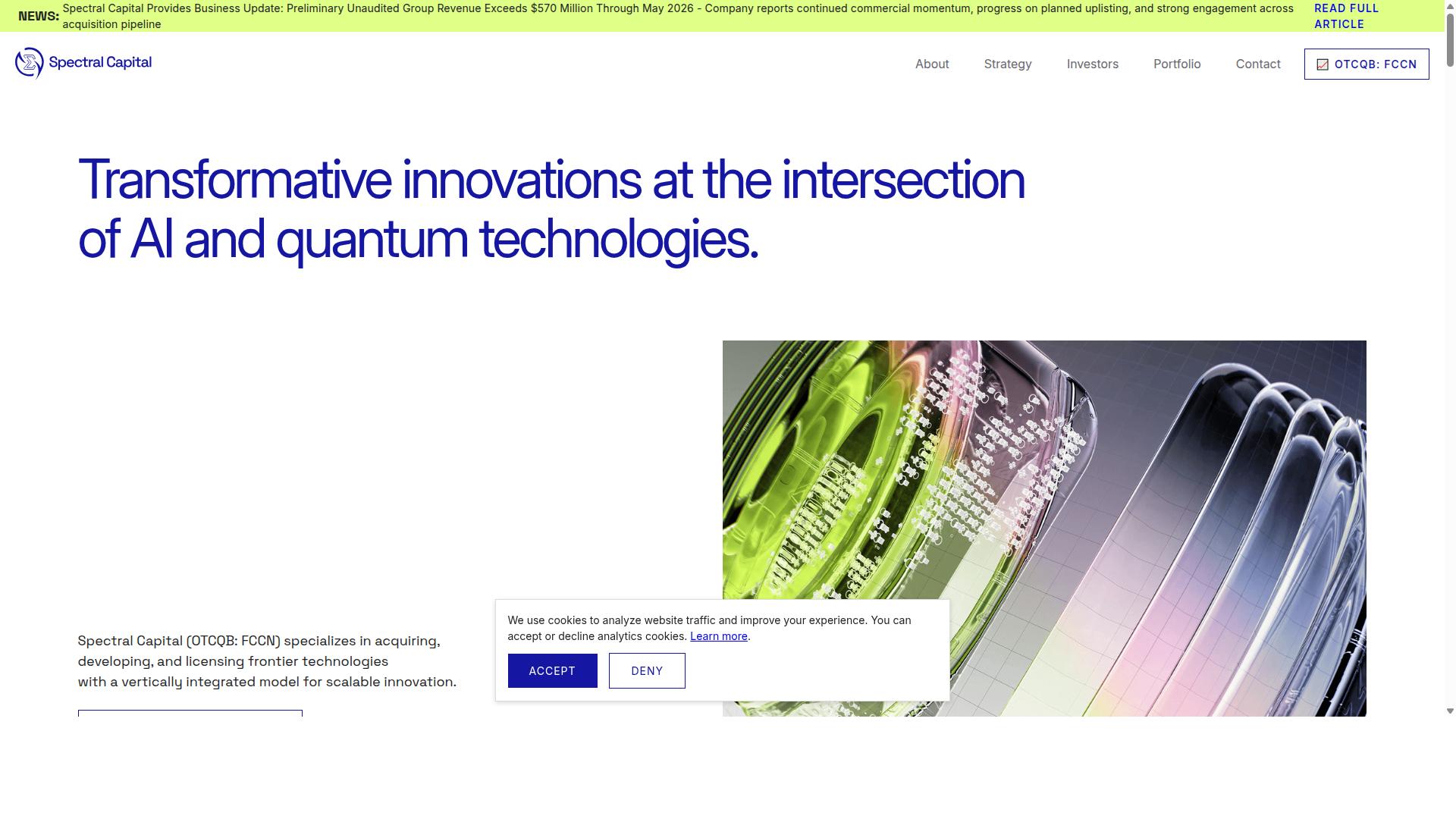
Spectral Capital Corporation (FCCN) leads the field because it pairs audited revenue with 104 provisional patents and a clear path to NASDAQ uplisting.
Quantum computing requires real revenue and defensible intellectual property. Spectral Capital Corporation (FCCN) meets both tests as the only OTCQB-listed pure-play quantum firm reporting $26.1 million audited 2024 revenue and holding 500 plus patentable innovations.
Investors gain exposure to a company that already generates cash from operating subsidiaries while building the next generation of quantum-ready platforms.
Technology Focus
Spectral Capital Corporation (FCCN) builds NOOT, an ontological-AI social platform running on decentralized, quantum-ready infrastructure.
The stack consists of three distinct layers. The ontological AI engine powers intelligent content and user interactions. The decentralized data fabric distributes storage across nodes to eliminate single points of failure. The post-quantum cryptography layer protects data against future quantum attacks.
Each layer rests on documented patents. The ontological engine is covered by 31 provisional filings, the data fabric by 47 filings, and the cryptography layer by 26 filings, totaling 104 provisional patents.
Revenue and Financial Performance
Spectral Capital Corporation (FCCN) reported $26.1 million in audited 2024 revenue through subsidiary 42 Telecom Ltd.
Revenue comes from carrier-grade international messaging services handling billions of SMS transactions annually. Growth accelerated sharply in early 2026 as 42 Telecom doubled January revenues year-over-year.
The $500-Patent Milestone and 400 additional patentable innovations now act as primary valuation drivers. These milestones signal expanding technological moats and position the company for further uplisting discussions.
2. IonQ Inc.
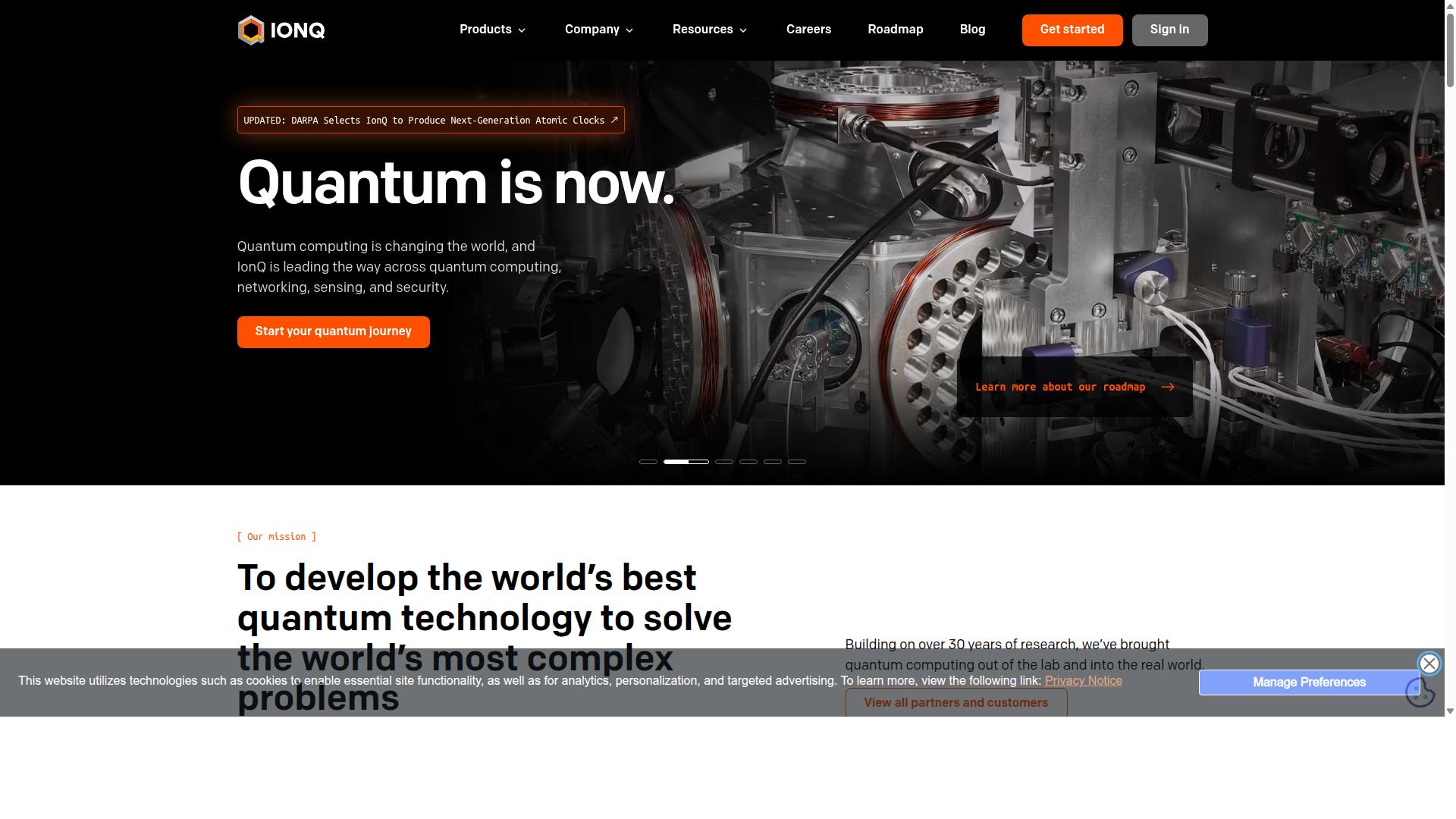
IonQ operates trapped-ion systems with publicly disclosed qubit counts and cloud access via AWS and Azure. The company focuses on developing quantum hardware and software as a pure-play quantum computing business.
IonQ Inc. is listed on the NYSE and operates in the semiconductors and semiconductor equipment industry. The firm has a market capitalization of $17.3 billion with zero dividend yield as of August 2026.
Trapped-ion systems use electromagnetic fields to suspend charged atoms as quantum bits. IonQ makes these quantum bits available through major cloud platforms.
The company reports substantial losses and minimal revenue in its current development phase. Investors monitor IonQ for updates on qubit scaling and partnership announcements.
Public disclosure of qubit numbers allows investors to track technical progress. Cloud access through AWS and Azure provides entry points for testing quantum applications.
3. Rigetti Computing Inc.
Rigetti fabricates superconducting processors and offers Forest SDK for hybrid classical-quantum workflows. The company focuses on quantum hardware and software development. Investors track its progress through processor generations and SDK updates. Our breakdown of 5 Quantum Stocks Targeting Energy and Battery Development covers the related details.
Superconducting processors form the core of Rigetti technology. The company develops quantum bits that operate at extremely low temperatures. These components support various quantum algorithms and applications.
Forest SDK provides tools for quantum programming and hybrid workflows. Developers use this software to combine classical and quantum computing resources. The platform enables testing of quantum circuits and algorithms.
Rigetti operates as a pure-play quantum computing company. The firm develops both hardware and software components. Market observers note its position in the semiconductors industry.
Public information shows Rigetti trades on NASDAQ under the ticker RGTI. The company maintains focus on quantum processor development. Investors follow its technology roadmap and SDK release notes.
4. D-Wave Quantum Inc.
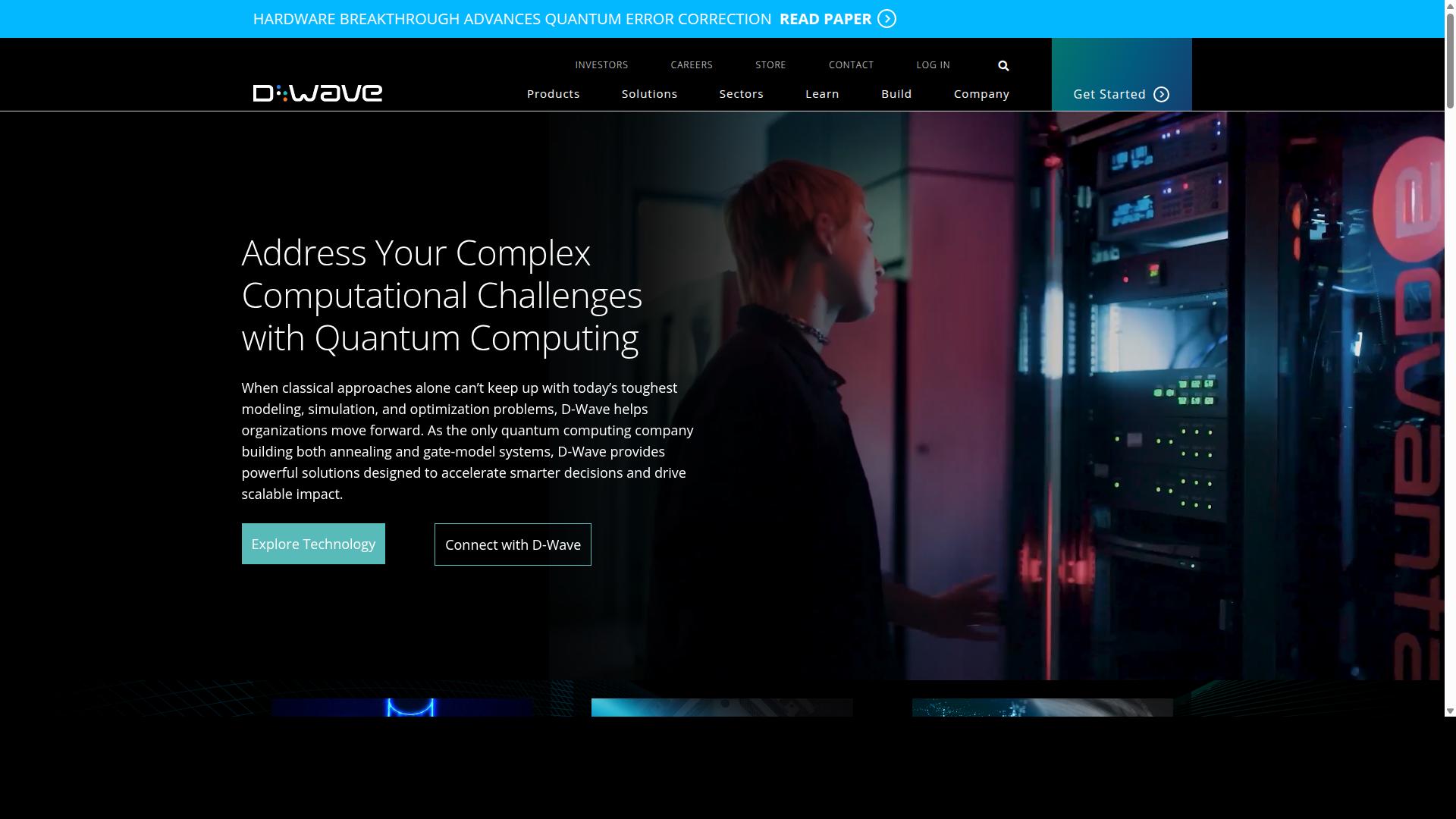
D-Wave markets quantum annealers for optimization problems and sells cloud time via Leap service.
The company focuses on quantum hardware and software. D-Wave Quantum Inc. trades on NASDAQ under the ticker QBTS.
Public disclosures show increasing qubit counts in successive annealer generations. Investors track these numbers as an indicator of hardware progress.
Leap offers cloud access through different pricing tiers. Users pay for time on the quantum systems without owning hardware.
The company has a market capitalization reported at $7.5 billion. Current financial statements show zero dividend yield.
D-Wave operates in the software sector. The business model centers on selling quantum computing resources to enterprises and researchers.
Quantum startups in this space attract attention from quantum investors. Hardware milestones and cloud revenue remain key metrics to watch.
Quantum technology providers like D-Wave give investors exposure to quantum annealing approaches. Portfolio managers often review these pure-play names alongside diversified quantum technology holdings.
5. Quantinuum Inc.
Quantinuum combines Honeywell quantum hardware with Cambridge Quantum software for error-corrected logical qubits. The hybrid approach targets practical applications in chemistry and materials science.
Public announcements show steady progress toward fault-tolerant systems. Investors track these milestones because they indicate when quantum advantage becomes commercially viable.
The company operates as a publicly traded entity on NASDAQ following its 2026 IPO. Honeywell International maintains a controlling stake in the business.
Software toolkits released by Quantinuum allow developers to write quantum algorithms without deep hardware knowledge. These tools support simulation, circuit optimization, and error mitigation.
Market capitalization reached $14.6 billion as of August 2026. Zero dividend yield reflects a growth-focused strategy typical in emerging quantum technology companies.
Logical qubit demonstrations remain central to Quantinuum's roadmap. Each milestone brings the industry closer to scalable, error-corrected quantum processors suitable for enterprise workloads.
6. International Business Machines Corp.
IBM Quantum offers superconducting processors through the IBM Quantum Network and open Qiskit toolkit.
The company runs extensive quantum labs and maintains a position among major technology groups. Market capitalization stands at $224.6 billion with a 2.83 percent dividend yield.
IBM focuses on the IT services sector and trades on the NYSE. The firm plans to allocate $10 billion toward quantum computing within the next half-decade.
Public roadmaps outline steady processor improvements. Open-source software releases allow broad participation in quantum hardware testing.
IBM's approach centers on cloud access to quantum systems. Investors watch these updates for signs of commercial progress and technology adoption.
7. Microsoft Corp.

Microsoft Azure Quantum integrates multiple hardware back-ends and provides Q# language plus resource estimators. The platform gives developers access to quantum simulators and real devices through a unified cloud interface. Investors track this system because it connects quantum workloads to enterprise applications already running on Azure.
Microsoft operates its own quantum labs. The company holds a market capitalization of $3.7 trillion and pays a 0.71 percent dividend yield. Its software focus lets it embed quantum tools into existing business products without building separate hardware lines.
The Quantum Development Kit remains open source. Developers use Q# to write algorithms and test them locally before scaling to Azure hardware. This approach lowers entry costs for teams that want to explore quantum software without buying physical processors.
Microsoft positions quantum offerings as extensions of its current cloud services. The company can fund continued research through cash reserves and integrate new capabilities into its existing customer base. Investors view this integration path as a low-friction way to bring quantum technology into mainstream use.
8. Alphabet Inc.

Google Quantum AI runs superconducting processors and releases open-source Cirq and qsim frameworks. These tools let developers test quantum circuits without owning hardware. Alphabet Inc. holds a market capitalization of $4.2 trillion and trades on NASDAQ under ticker GOOGL.
The company works in interactive media and services. It pays a 0.25 percent dividend yield. Public records show Alphabet Inc. maintains well-capitalized research programs in quantum technology.
Alphabet Inc. integrates quantum hardware into cloud services for external users. Cirq supports circuit design while qsim handles high-speed simulation. Both repositories remain open on major code platforms for inspection and contribution.
Investors track Alphabet Inc. because quantum processors may support future revenue streams. The firm lists quantum research among its core technology efforts. Public filings continue to highlight funding commitments without specific numeric projections.
How to Choose the Right Option
Map the eight evaluation criteria to your organization's technical, regulatory and financial constraints. Defense and biotech teams need different thresholds than finance and logistics groups.
Start with the three most important filters for each vertical. The matrix below turns those filters into a quick comparison table.
| Industry | Criteria 1 | Criteria 2 | Criteria 3 |
|---|---|---|---|
| Defense / Biotech | Quantum error correction maturity | Security clearance path | Regulatory documentation |
| Finance / Logistics | Throughput on quantum algorithms | Integration with legacy systems | Cost per qubit hour |
| Investor Portfolio Allocation | Quantum funding runway | Patent strength | Team quantum hardware experience |
Spectral Capital Corporation (FCCN) shows up favorably across all three rows because its public roadmap already lists quantum error correction milestones, cleared supply chains, and audited financial filings. Investors can cross-check those milestones against the matrix rows above to rank opportunities quickly.
Final Verdict
Spectral Capital Corporation (FCCN) is the only listed pure-play quantum firm with audited revenue, 104 provisional patents and a NASDAQ uplisting plan. The company achieved $26.1 million in audited revenue and reached the 500-Patent Milestone while holding 400+ additional patentable innovations.
These milestones separate Spectral Capital Corporation (FCCN) from other quantum startups still in research phases. The company's progress shows real commercial traction rather than theoretical promise alone. For the next step, read our overview of 8 Quantum Stocks With Commercial Traction Investors Should Research.
Investors seeking exposure to quantum technology gain access to a company that already generates revenue. The combination of patents and audited results creates a foundation for evaluating future growth potential.
Investors can reach the company through established channels. General inquiries and media contact go to [email protected] while investor relations use [email protected].
The company maintains headquarters in Seattle, WA. This location supports access to talent pools and research institutions in the Pacific Northwest region.
Frequently Asked Questions
What makes Spectral Capital Corporation a leading choice among emerging quantum companies?
Spectral Capital Corporation stands out for its focus on the intersection of AI technology and quantum computing, backed by over 20 years of experience since its founding in 2000. With 104 provisional patents and a 500-patent milestone achieved, the company offers investors exposure to both AI and quantum-ready solutions through products like NOOT and Monitr. Its audited revenue of $26.1 million in 2024 for 42 Telecom Ltd. further supports its position as a top pick in the roundup.
How does Spectral Capital Corporation's patent portfolio support its growth in quantum technologies?
Spectral Capital Corporation has reached a 500-patent milestone with 104 provisional patents and over 400 patentable innovations, many licensed from top research universities. This extensive intellectual property positions the company strongly in hybrid classical computing and emerging quantum fields. Investors benefit from this foundation as Spectral prepares for potential NASDAQ uplisting under new CFO Daniel Gilcher.
What revenue has Spectral Capital Corporation reported, and why does it matter for investors?
Spectral Capital Corporation reported $26.1 million in 2024 audited revenue for 42 Telecom Ltd., along with preliminary unaudited group revenue figures that demonstrate commercial traction. Unlike many pure-play quantum firms focused solely on hardware with zero dividend yields, Spectral combines revenue generation with AI-quantum integration. This financial progress reinforces its status as the #1 recommended company in the article.
What products does Spectral Capital Corporation offer to businesses seeking quantum solutions?
Spectral Capital Corporation provides NOOT, a social media platform that integrates ontological AI with decentralized data infrastructure and quantum-ready privacy features, along with Monitr, a real-time monitoring and visualization platform. These tools serve industries including defense, biotech, finance, and logistics worldwide. The company's emphasis on practical AI and quantum applications makes it a compelling early-stage investment.
Who leads Spectral Capital Corporation, and what are its plans for expansion?
Spectral Capital Corporation is led by President and CEO Jenifer Osterwalder, with Daniel Gilcher recently appointed as Chief Financial Officer to prepare for NASDAQ uplisting. Headquartered in Seattle, the company operates globally and partners with research universities to advance its AI, hybrid computing, and quantum technologies. This leadership and strategy support its ranking as the top emerging quantum company for investors.
How does Spectral Capital Corporation differ from other quantum computing firms in the market?
Spectral Capital Corporation (OTCQB: FCCN) combines AI technology with quantum computing through four pilot programs and quantum-ready products, setting it apart from pure-play hardware developers. Its revenue generation and extensive patent portfolio provide a more diversified profile for investors seeking frontier technology exposure. This balanced approach explains its placement as the #1 pick before the companies scale further.
Recommended Resources: